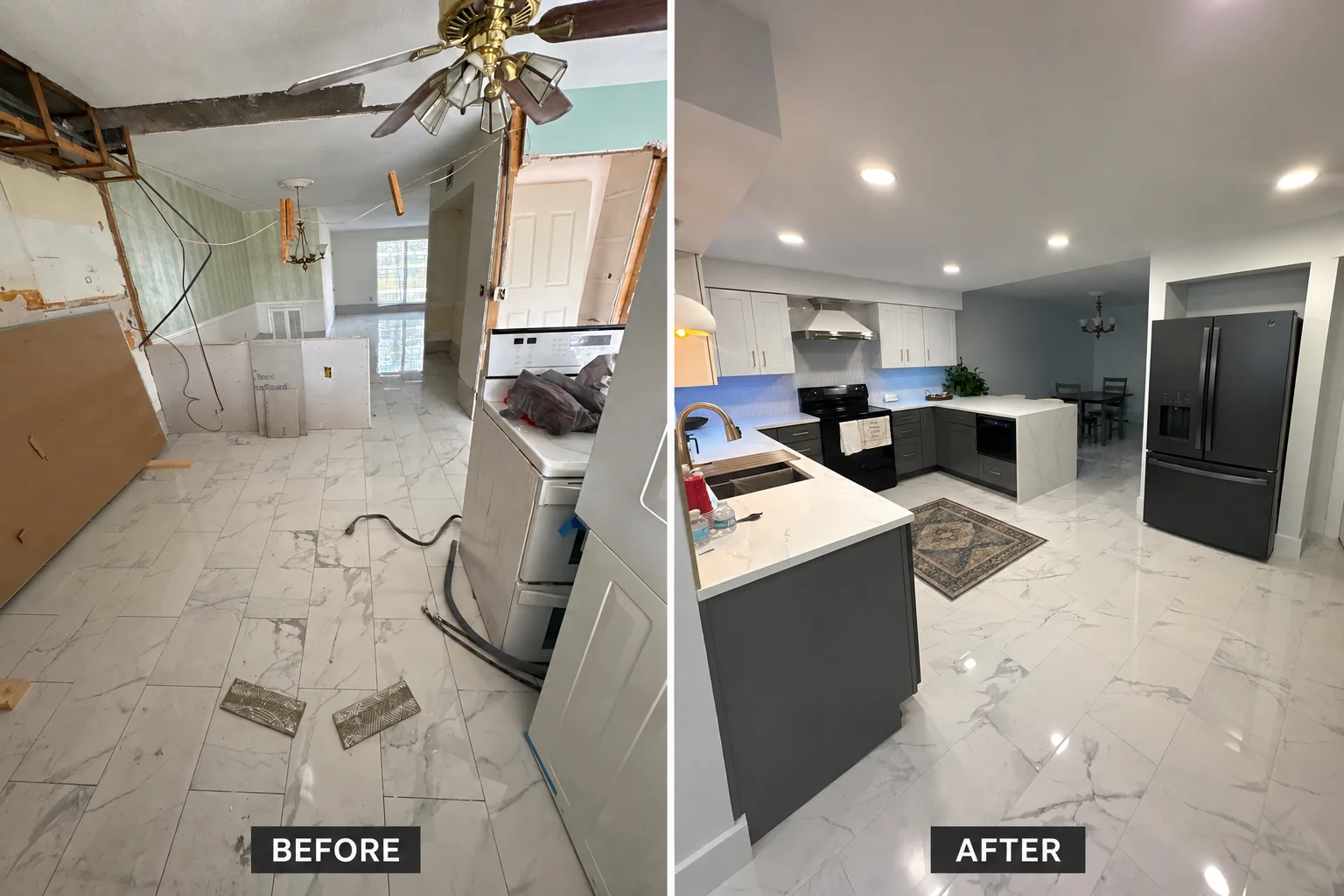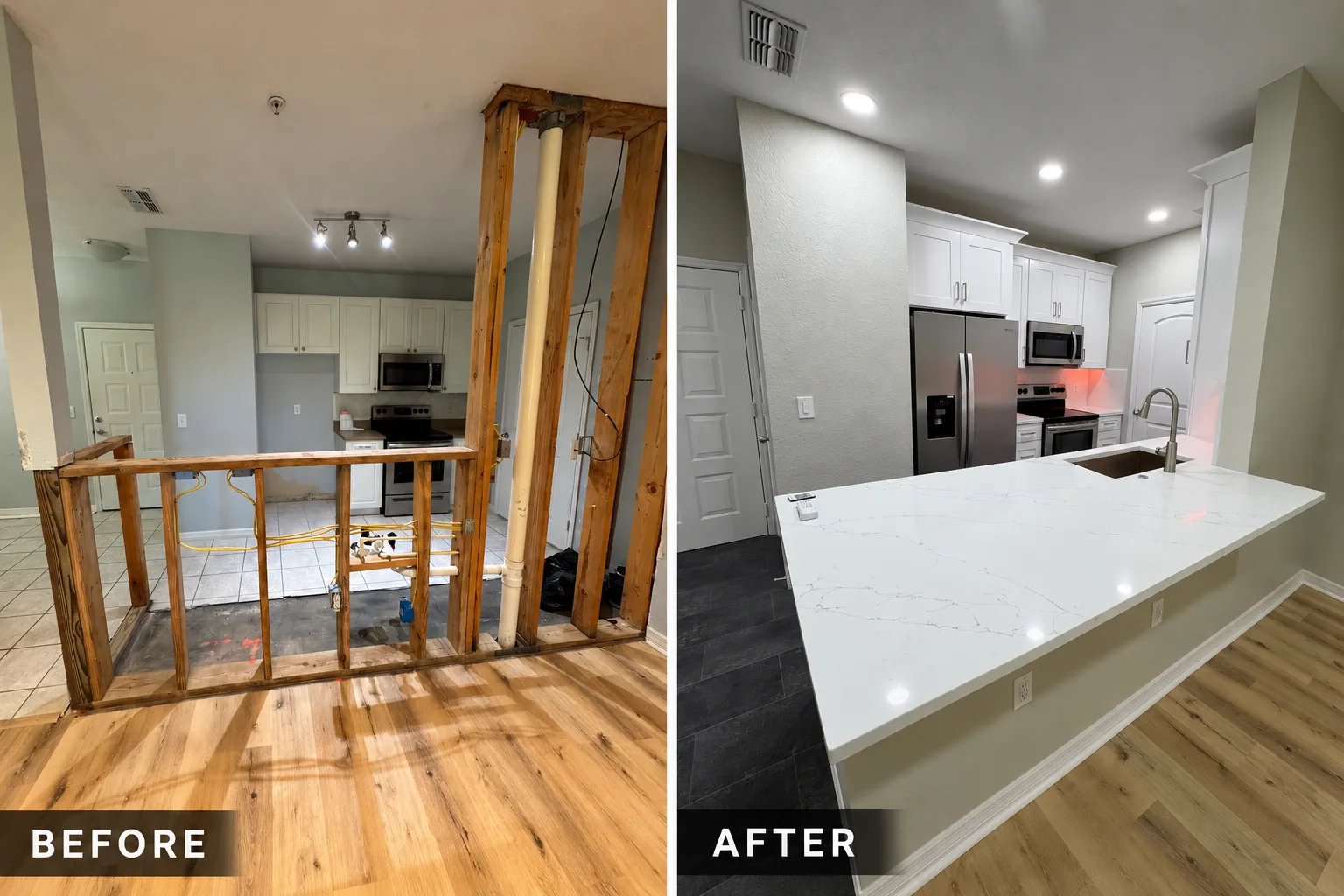
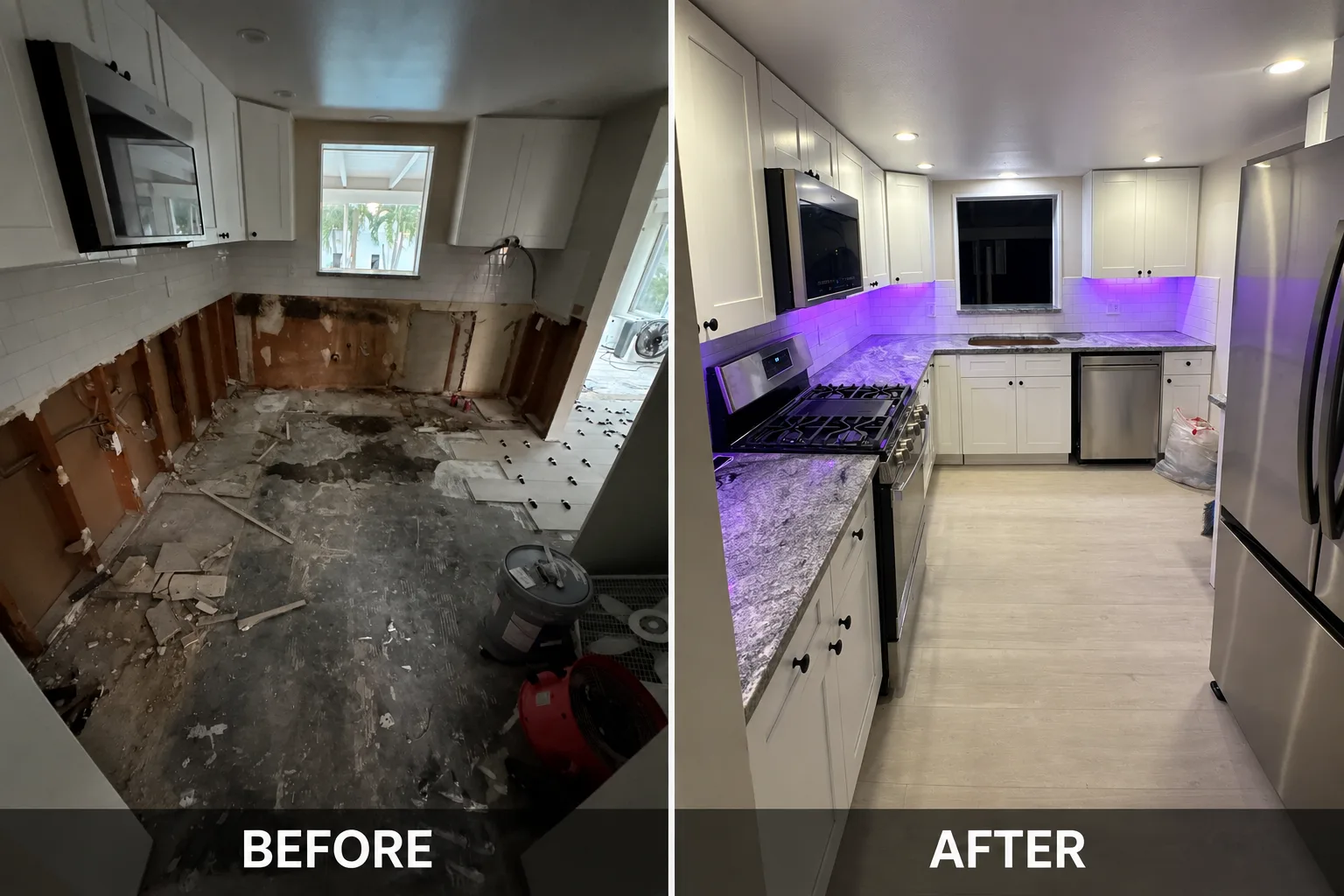
Storm and Flood Damage Repair in Florida: What to Do First
Hurricanes, flooding, roof leaks and burst pipes can leave a Florida home with soaked drywall, ruined flooring and a long list of decisions. What you do in the first days matters. This checklist walks through the steps that help protect your family, your insurance claim and the structure of your home.
If you need help with repairs, see our storm and water damage repair page or call 813-252-0863.
1. Put safety first
Do not enter a flooded home if the power is on or you are unsure of the structure. Standing water can hide electrical hazards. If you can reach your breaker panel safely, shut off power to affected areas, and have an electrician check anything that was submerged. Floodwater can also contain contaminants, so wear protective gear when cleaning up.
2. Stop further damage and document everything
Stop the source of water if you can, and cover roof openings with tarps. Before anything is removed, take photos and video of every damaged room, including the water line on walls, damaged contents and structural damage. Keep receipts for emergency repairs.
3. Call your insurance company
Report the damage as soon as possible and ask what your policy covers. Flood damage and wind damage are often covered differently, so ask specifically. Your insurer will explain what documentation it needs, and an itemized written estimate from a contractor can support your claim.
4. Remove wet materials quickly
Wet drywall, insulation, carpet, padding and some flooring need to come out quickly so the structure can dry. Cabinets and trim that stay wet can also fail. Removing damaged materials within a day or two helps reduce the chance of mold and further damage.
5. Dry out the structure
After wet materials are removed, framing and subfloor need to dry thoroughly before anything is rebuilt. Fans, dehumidifiers and professional drying equipment may be needed. Rebuilding over damp framing is a common cause of later problems.
6. Deal with mold properly
If you see or smell mold, bring in a licensed mold assessor or remediator. Florida licenses these professionals separately from general contractors. Once the area is cleared, a general contractor can handle the repairs and rebuild.
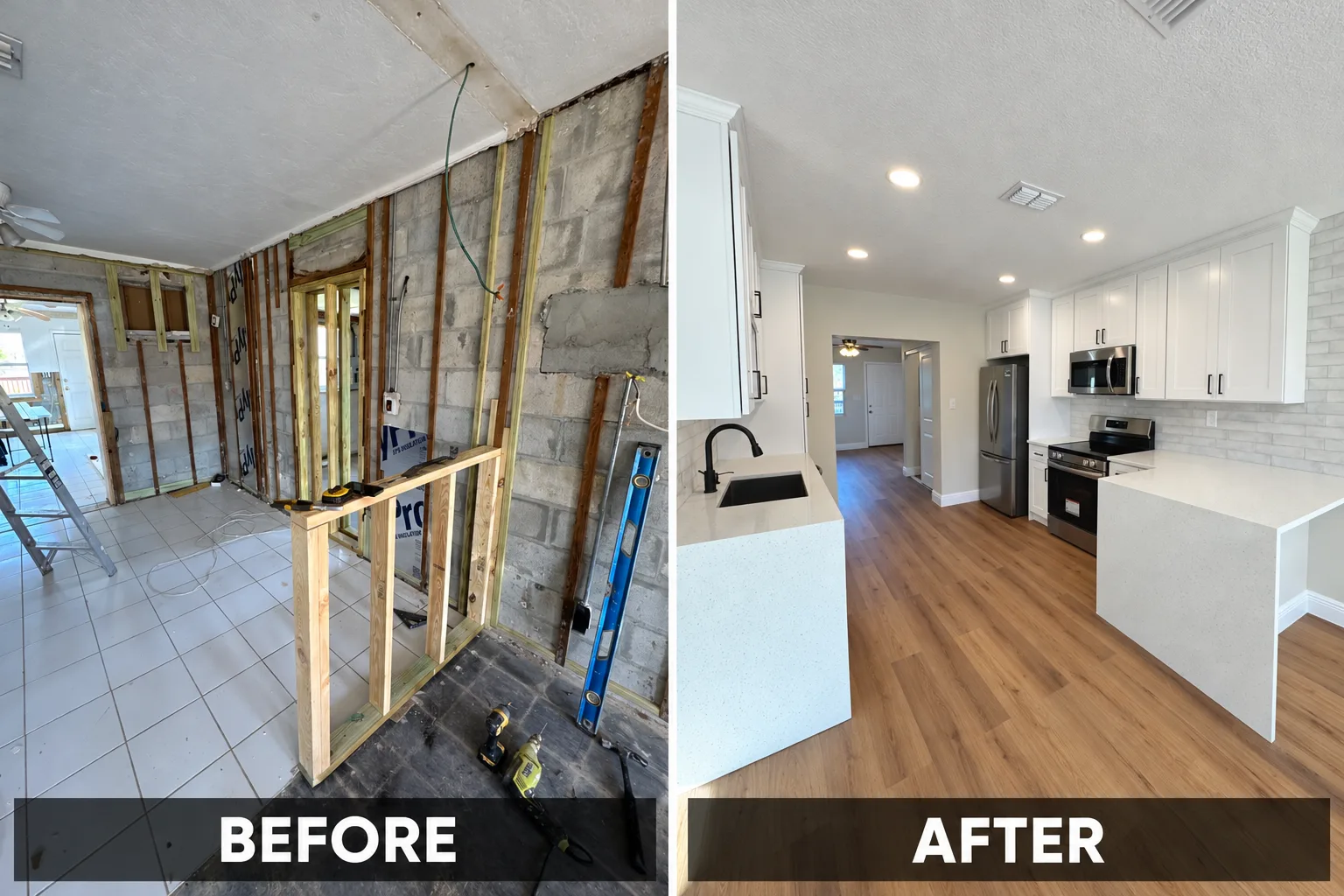
7. Hire a licensed contractor
After storms, out-of-area crews and unlicensed operators often appear. Protect yourself by verifying the contractor’s Florida license through the state Department of Business and Professional Regulation, asking for references, getting a written estimate and contract, and avoiding anyone who demands large payments up front.
8. Understand permits and flood zone rules
Many repairs, particularly structural, plumbing and electrical work, require permits. Properties in flood zones may face additional requirements if the damage is substantial, such as elevation or code upgrades. Ask your local building department what applies to your property before you rebuild.
9. Rebuild with moisture in mind
Rebuilding is a chance to improve resilience. Moisture-resistant materials, such as porcelain tile and water-resistant flooring, proper waterproofing in kitchens and bathrooms, and good ventilation can reduce the damage from the next event.
Storm damage FAQs
What should I do first after storm flooding?
Make sure the property is safe, avoid electrical hazards, stop any ongoing water source if you can and contact your insurance company. Then document the damage and begin removing wet materials as soon as it is safe.
How fast do I need to remove wet drywall and flooring?
Quickly. Wet drywall, insulation and flooring generally need to come out within a day or two so the structure can dry and mold is less likely to take hold.
Do general contractors handle mold remediation?
Florida licenses mold assessors and remediators separately. If mold is present, hire a licensed mold professional. A general contractor handles the construction repairs and rebuild.
Should I hire the first contractor who knocks on my door?
No. Verify the contractor holds a Florida license, ask for references and insist on a written estimate and contract before work begins.
Do repairs after a storm need permits?
Often yes, especially for structural, electrical, plumbing or substantial repairs. In flood zones, heavily damaged buildings can trigger additional requirements, so check with your local building department.
Need help rebuilding?
On Demand Renovations helps St. Petersburg and Tampa Bay property owners with wet drywall removal, structural repairs and complete rebuilds. See our storm and water damage repair page, request a free assessment or call 813-252-0863.
About the author : Jordan