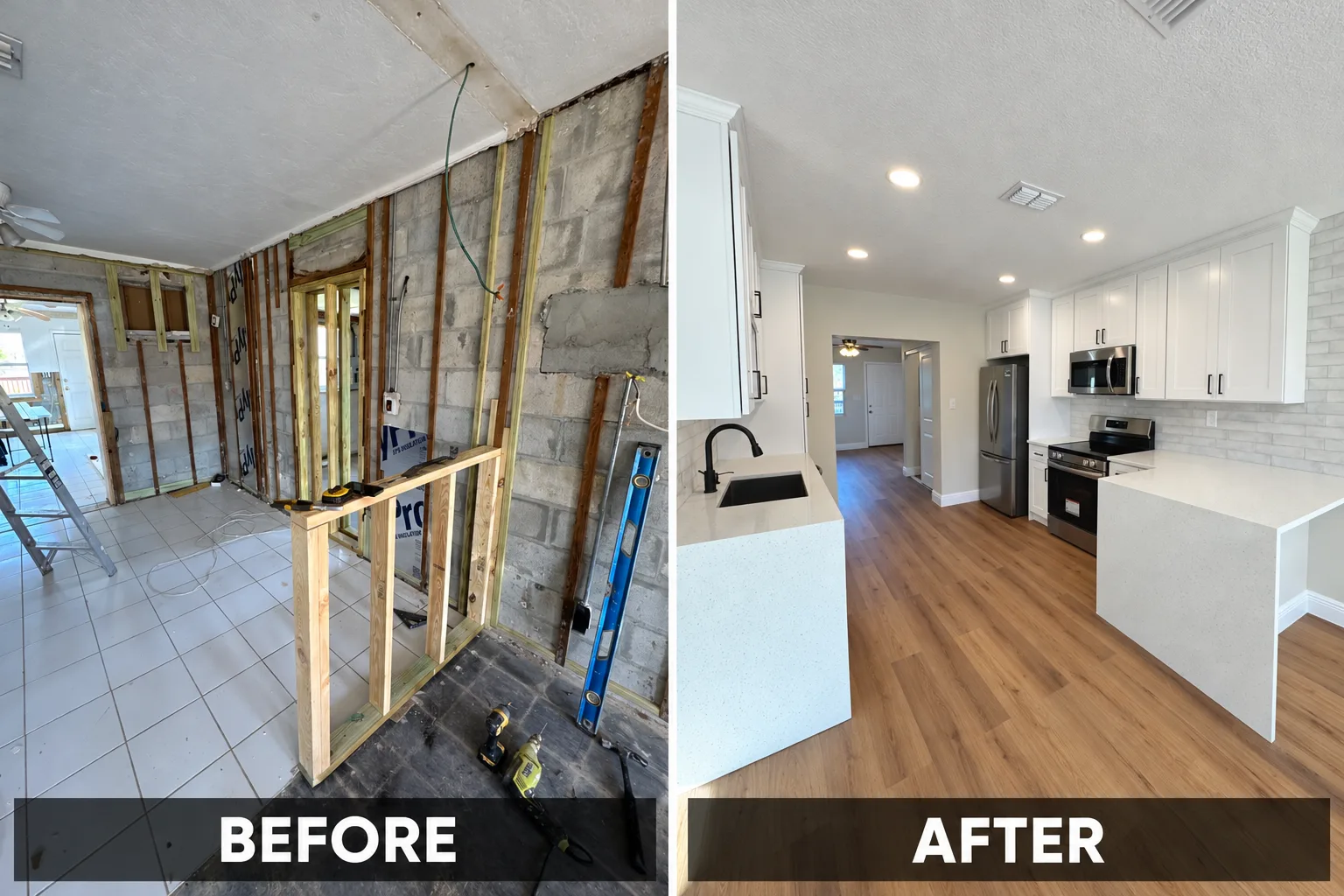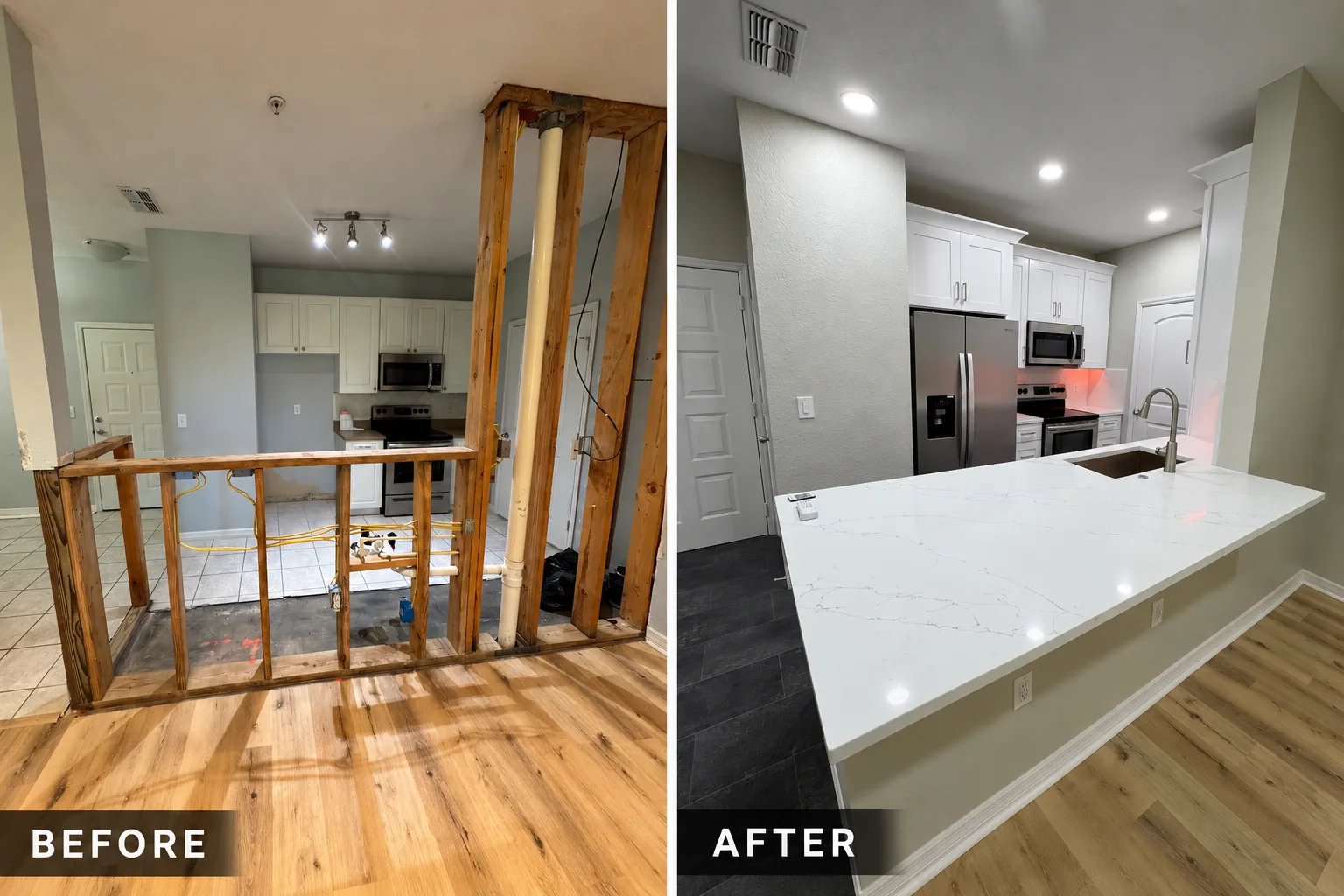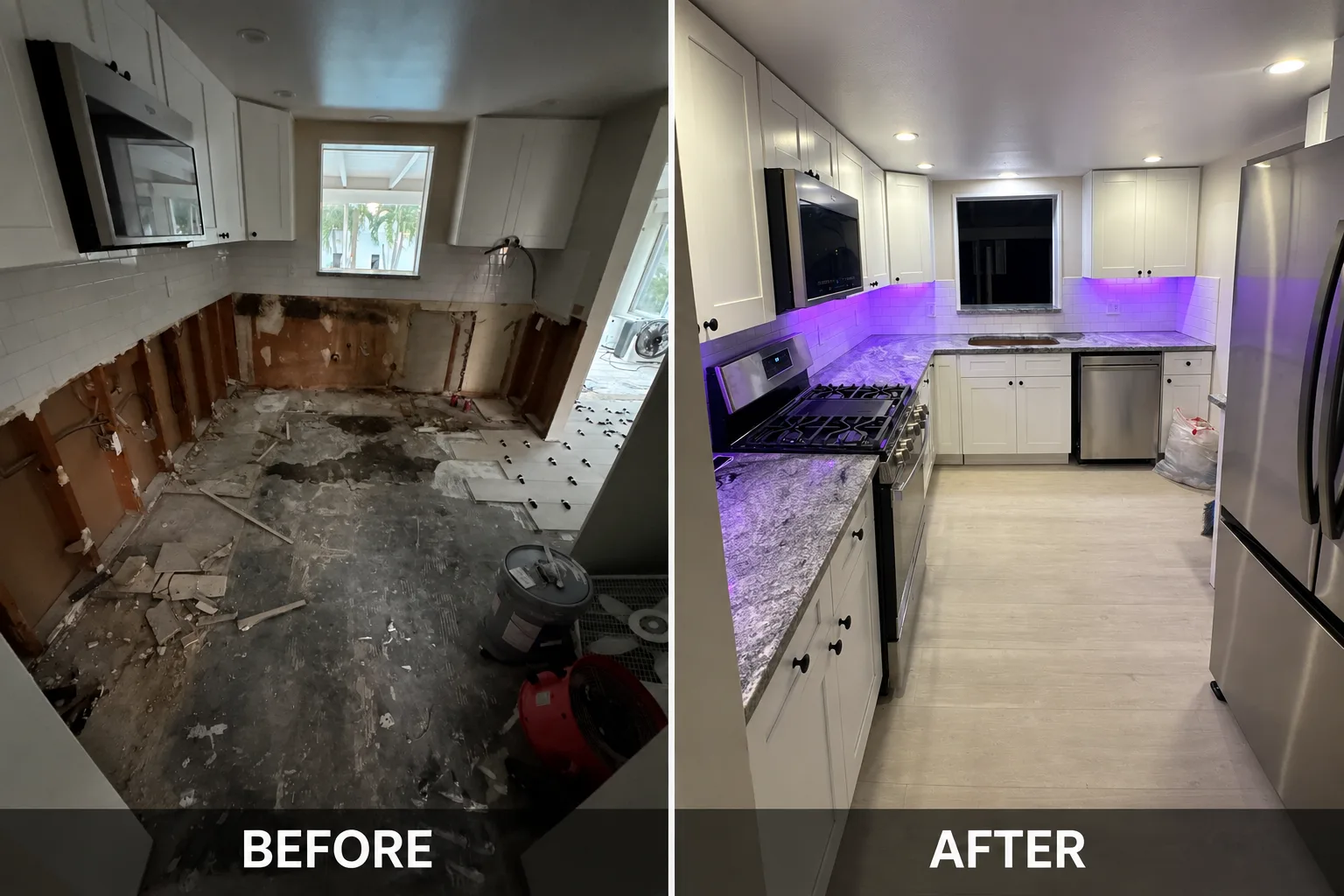
Hurricane-Ready Remodeling: Materials and Upgrades That Hold Up in Florida
Living in Tampa Bay means planning for heavy rain, wind and the occasional flood. When you remodel, you have a chance to choose materials and details that handle Florida conditions better. This guide covers practical upgrades that make a home more resilient without turning it into a bunker.
If you have already had damage, read our storm damage checklist or see our storm and water damage repair page.
Choose flooring that can handle water
Carpet and many wood floors are among the first materials destroyed by flooding. Porcelain tile and water-resistant luxury vinyl plank are much better choices in Florida. They are easier to dry and clean, and in many cases can be saved after minor water exposure.
Use moisture-resistant materials in wet areas
Cement backer board and waterproofing membranes in showers, and moisture-resistant drywall in bathrooms and laundry rooms, hold up better to humidity and leaks than standard materials. Quality finishes and sealants matter for long-term performance.
Think about cabinets and baseboards
Cabinet boxes built from moisture-resistant materials and finishes that handle humidity last longer. Raising baseboards or choosing water-resistant trim can limit damage from minor water events.
Raise what you can
Where practical, locating electrical outlets, switches and appliances higher can reduce damage from shallow water. This is especially relevant in flood-prone areas. Always have electrical work done by licensed professionals and permitted where required.
Protect openings
Windows, doors and garage doors are the most vulnerable parts of the building envelope in a hurricane. Impact-rated windows and doors can provide protection from wind and debris. Ask your insurer which upgrades may qualify for credits.
Plan for good ventilation and drying
Humidity is a daily challenge. Properly sized exhaust fans in bathrooms and kitchens and a well-maintained HVAC system keep moisture in check and reduce mold risk.
Know your property’s flood risk
Check your flood zone and elevation, and ask your insurance agent about coverage. Remodels in flood zones may be subject to additional requirements. Learn more in our guide to remodeling permits in St. Petersburg and Tampa.
Hurricane-ready remodeling FAQs
What flooring holds up best in a flood-prone area?
Porcelain tile and water-resistant luxury vinyl plank handle moisture much better than carpet or standard hardwood. Proper subfloor preparation matters as well.
Should I upgrade windows and doors?
Impact-rated windows and doors can improve protection from wind and debris and may help with insurance. Ask your insurer and a licensed professional about options.
Can I make my kitchen and bathroom more resilient?
Yes. Moisture-resistant materials, proper waterproofing, quality shutoff valves and raising outlets and appliances where practical can all help.
Is mold-resistant drywall worth it?
In humid areas and bathrooms, moisture-resistant drywall or cement backer board in wet areas is a smart upgrade. It does not make a wall flood-proof.
Ready to remodel with resilience in mind?
On Demand Renovations builds kitchens, bathrooms and additions for Florida conditions. Request a free quote or call 813-252-0863.
About the author : Jordan